Breast cancer can show up on the skin. Here's what to know

Breast cancer doesn't always start with a lump. Oftentimes, some of the first warning signs show up on the skin.
Research shows that up to 10% of breast cancer patients were initially diagnosed with skin changes.
Breast cancer therapies can also cause skin, hair or nail side effects, something up to 94% of patients experience, studies show.
"Having a dermatologist on board early in the process can help establish a baseline and have a plan in place, should any side effects arise," Dr. Kiran Mian, a dermatologist at Hudson Dermatology and Laser Surgery, told ABC News.
When skin changes could be a warning sign for breast cancer
Breast cancer is the most common cancer to spread to the skin, research shows.
The disease can also cause visible changes to the skin of the breast. Symptoms usually affect one breast and can include discoloration, a persistent rash, swelling, warmth, skin that looks pitted like an orange peel and a nipple that turns inward, according to the National Cancer Institute.

These changes can have many causes and do not always mean cancer, but a new or persistent change that does not improve should be evaluated by a doctor.
One type of breast cancer in which skin symptoms can be especially noticeable is inflammatory breast cancer.
Inflammatory breast cancer, or IBC, is a rare but aggressive type that makes up 1% to 5% of all breast cancers, according to the American Cancer Society. It tends to grow and spread faster than more common types of breast cancer, and it is more often diagnosed in Black women and at younger ages.
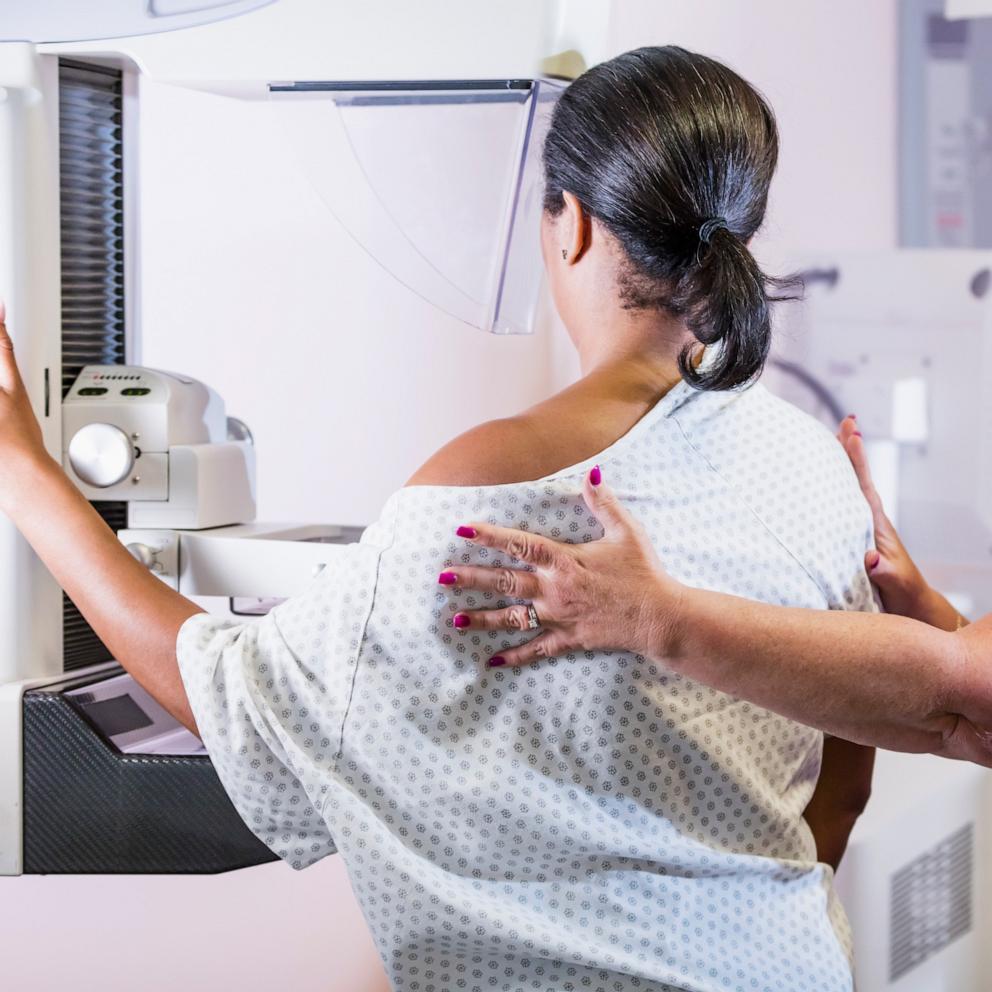
Because IBC usually doesn't form a lump, it may not show up on a mammogram and can be mistaken for a breast infection or an eczema-like rash.
"Sometimes these patients are presenting with skin changes rather than a discrete lump," Dr. Elizabeth Comen, a medical oncologist and breast cancer specialist at NYU Langone Health, told ABC News. "A lot of times, patients will be put on some sort of antibiotic, and they won't get better, and that's when we often do a punch biopsy."
Breast cancer therapies that may cause skin changes
Radiation often irritates the skin, causing redness that can feel like a sunburn, along with swelling, itching and darkening of the skin. At higher doses, the skin can peel and leak fluid.
"For my patients undergoing radiation, the foundation is gentle skin care and liberal moisturization," Mian said.
These changes usually develop gradually during treatment and can continue for a short time after radiation ends. Patients may be advised to use gentle, fragrance-free products, keep the area moisturized, and avoid anything that further irritates the skin.
More severe reactions should be discussed with the patient's cancer care team or a dermatologist.
"It's not uncommon for patients to have skin toxicities, and sometimes we lower doses, sometimes we use topical medications," Comen said.
Dermatologists can work alongside a patient's cancer team to help manage these symptoms, which may allow patients to stay more comfortable during treatment.
Looking and feeling like yourself
Hair loss is the side effect many patients fear most, with more than 70% of patients reporting it is their most-feared side effect, and nearly 10% considering turning down chemotherapy because of it, research shows.
"Hair loss is not superficial. It can be a huge part of someone's identity," Comen said.
Scalp cooling, which involves wearing a cold cap during chemotherapy, can help limit hair loss. Up to two-thirds of women who use it kept at least half their hair, one study found.
"We see this often, that patients are not aware of the option of cold capping, depending on the chemotherapy regimen that they give, or they assume that all chemotherapy treatments necessarily mean hair loss, which is not true," Comen said.
Hair loss may also occur on other parts of the body, aside from the head.
"Thinning hair along with eyebrows and eyelashes can be quite distressing." Mian said.
Dermatologists can also help patients understand which treatments are appropriate to use during and after cancer therapy.
Options after therapy may include minoxidil for hair loss and treatments for changes affecting the eyebrows, eyelashes, scars or dark spots, she said.
For patients, speaking up about changes in the skin can be important both during treatment and before a cancer diagnosis.
"Never be afraid to ask your doctor about a new rash," Comen said. "Breast cancer doesn't always present with a lump."
Dr. Tara Howard is a fourth-year dermatology resident and a member of the ABC News Medical Unit.