Her battle with cancer went viral. After her death, Natasha's advocacy lives on

The cancer late TikTok influencer Natasha Allen faced is being highlighted this July for Sarcoma Awareness Month, with her advocacy being honored on Capitol Hill by the Sarcoma Foundation of America (SFA).
During a congressional reception, survivors, lawmakers and supporters from across the country joined together to discuss advocacy priorities -- notably the Clinical Trial Modernization Act that was introduced to Congress last May. Lawmakers are expected to hear from sarcoma survivors this week in hearings and meetings on the Hill.
Allen, 28, who was first diagnosed with synovial sarcoma, a rare and aggressive cancer, in 2020, was a leading voice in the sarcoma and Adolescent and Young Adult Cancer (AYA) communities.
"Natasha Allen was a force, and she took her journey and she put it out there for others...But she also did it in a way to bring other people along," Brandi Felser, the CEO of SFA, said at the reception.
Emphasizing the importance of funding, Allen's mother said, "Because sarcoma is rare. Because sarcoma is overlooked. Because sarcoma is the lost generation of cancers."
Allen's mother is an ABC News producer.
Synovial sarcoma cancer is often found in the arm, leg, or foot, and near joints such as the wrist, knee or ankle, according to the National Cancer Institute, and it can "also form in soft tissues in the lung or abdomen."
According to the health agency, "one-third of patients with synovial sarcoma will be diagnosed under the age of 30," and the condition is "somewhat more common in males." Treatment options can include surgery, radiation therapy or chemotherapy.
Allen's five-year-long journey and battle with synovial sarcoma ended on Aug. 22, 2025, however, her continued impact on the cancer community and beyond continues to live on.
In a statement in April, the SFA said Allen, a "founding member of SFA's ... Adolescent and Young Adult Committee and the very first guest on SFA's 'Sarcoma Stories' podcast," helped shape how the foundation "connect[s], support[s], and empower[s] the sarcoma community."
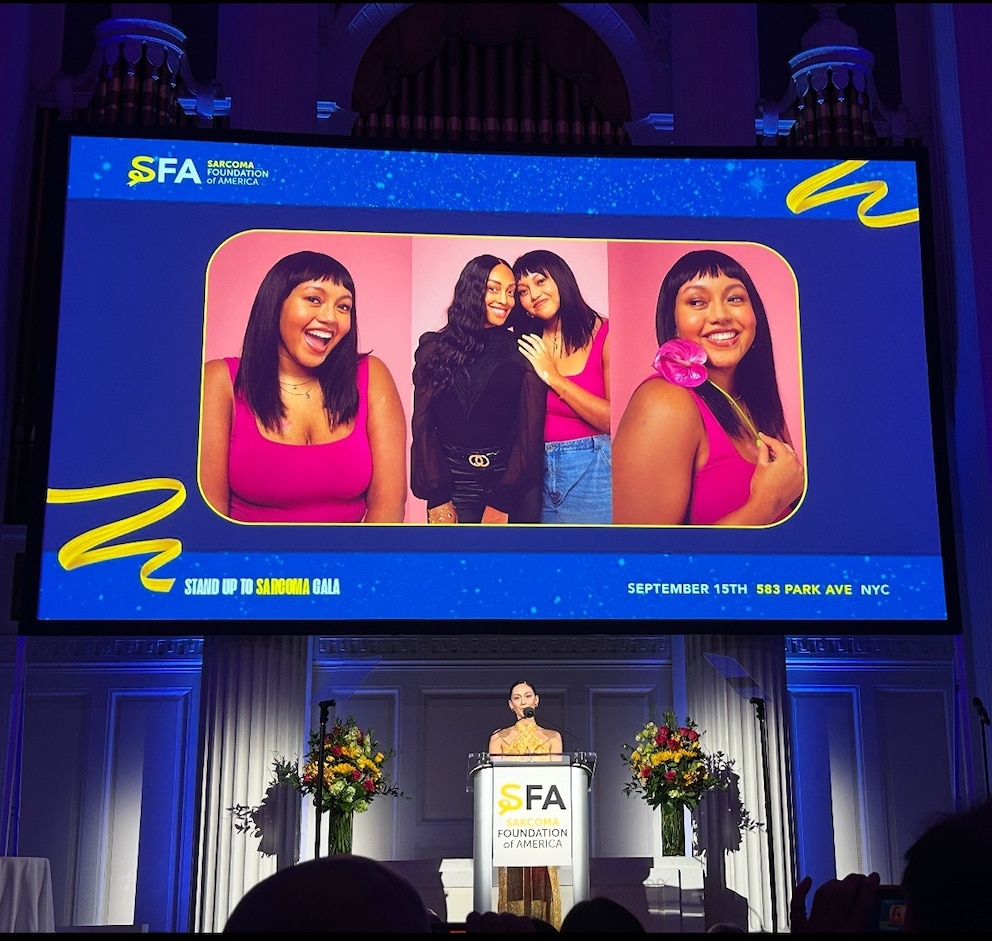
Social media followers still watch Allen's content and reach out to her family daily to share the impact Allen had on their lives, according to the family. The family worked with SFA to establish a research fund in her name, because, according to them, "Allen was always clear that if cancer cut her life short, she would never lose the battle."
Allen "won the battle time and time again," her family said, and the fund was established to continue Allen's legacy and "help other families experiencing synovial sarcoma and rare cancers."
Allen said in a 2024 "GMA3" interview that she received imaging of her knee, which had been bothering her, in 2019. She said her doctor at the time dismissed the lump in her knee as a cyst.
She underwent a biopsy nine months later in August 2020, even though she said she had asked for one multiple times before then, according to a social media post. The then-23-year-old was subsequently diagnosed with Stage 4 synovial sarcoma. The lump in her knee was a tumor.
"A lot of doctors don't assume it's cancer, because young people aren't supposed to get cancer," Allen said in a social media post at the time. "But we do. We're here."
Allen was honored in May at CancerCon 2026 -- the same conference at which she was supposed to be the opening keynote speaker last year on the day she died.
The nonprofit organization Stupid Cancer brings together hundreds of patients, survivors, advocates, and health professionals in the AYA cancer community at CancerCon each year to learn, share, and build community. This year, the event is taking place from April 30 to May 3 in Seattle, Washington.
"Many AYAs struggle with isolation. Fighting that is the reason that Stupid Cancer was formed and why Natasha's unique ability to make young survivors feel seen for the first time was so impactful," Alison Silberman, CEO of Stupid Cancer, told ABC News in a statement.
Cancer incidents are substantially higher in girls and women, according to the American Cancer Society (particularly in older AYAs, research published on the National Institutes of Health website shows). Cancer rates are 30% higher in women aged 20-29 (55 versus 42 per 100,000) compared to males and nearly double in those aged 30-39 (161 versus 84 per 100,000), the American Cancer Society states.

Black AYA patients had a 47% higher mortality risk and Hispanic patients had a 3% higher risk compared to white patients, according to research presented at the 2025 American Society of Clinical Oncology Annual Meeting.
Globally, approximately 1.3 million AYA cancer cases and 377,621 cancer-related deaths occurred in 2022, according to research published in the Journal of Hematology & Oncology.
In the United States, there were approximately 89,500 new cancer cases in 2020 and approximately 9,270 cancer deaths among AYAs, according to a study published in CA: A Cancer Journal for Clinicians in 2020 and shared on the National Library of Medicine website.
AYA cancer incidences have been increasing over time, that same study found. In the U.S., overall rates increased in all AYA age groups between 2007 and 2016, largely driven by thyroid cancer (rising approximately 3% annually among those 20 to 39 years old and 4% annually among those aged 15 to 19) and obesity-related cancers including kidney (3% annually), uterine corpus (3% among those 20-39 years old) and colorectal cancer (0.9-1.5% among those 20-39 years old).
In a statement in April, Felser said Allen was "unafraid to say the things that needed to be said to advance progress and improve outcomes for people diagnosed with sarcoma."
"If someone was going to make change, it was going to be Natasha," Felser said. "Equally as important, she was a friend and mentor to others living with sarcoma and a bright light in what can be dark days."