What’s the temperature of a T. rex? Hotter than you might think

If you visit Thomas, a teenage Tyrannosaurus rex at the Natural History Museum of Los Angeles County, you'll see a towering predator, 34 feet long and weighing nearly 7,000 pounds, looking down at you with his jaw open, his banana-shaped serrated teeth at the ready.
It's those teeth that helped scientists at UCLA, led by geobiology graduate student Randy Flores, along with a team of international researchers, answer a question long steeped in speculation. What was the internal temperature of a T. rex?
"Temperature and metabolic rate are very fundamental aspects of any organism's biology, and so there's a lot of things that are linked to that," said Robert Eagle, a professor and geobiologist at UCLA and a co-author of the T. rex temperature study.
"It's driving the behavior, the range of an organism, where it can actually sit, the energy budget it has, how much food it needs to eat, what it needs to eat, how it responds to a changing climate. And so if you don't have body temperature, you don't really have the animal. But with this now, there's so much more now that can be done," explained Aradhna Tripati, a professor and climate scientist at UCLA and a co-author of the study.
It turns out a T. rex's temperature was pretty close to ours: 97 degrees Fahrenheit. Eagle says that's higher than a reptile or some slower mammals like sloths, but lower than birds, which evolved from dinosaurs.
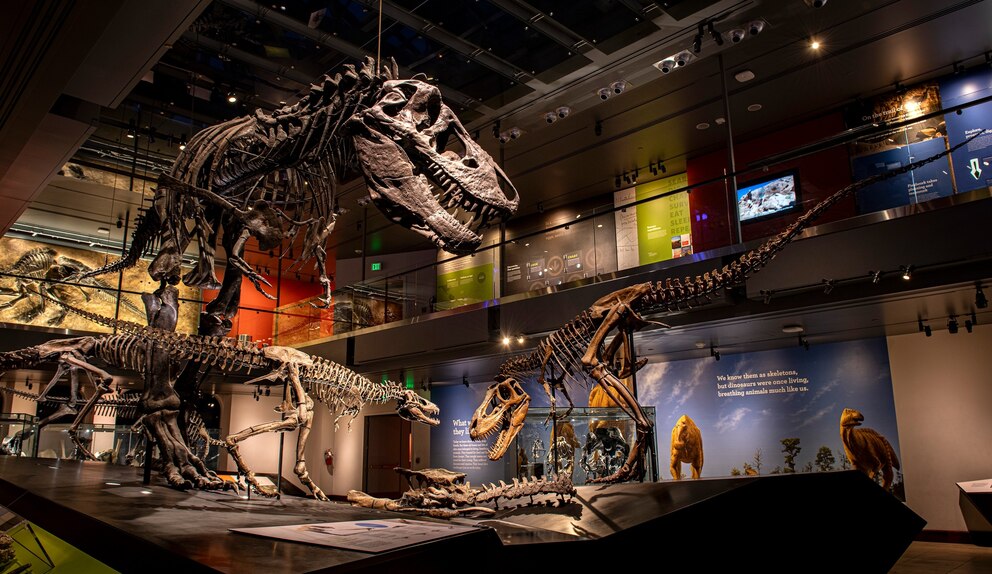
“In this study, we were able to show that T. rex has a reconstructed body temperature that's statistically different from the coexisting crocodilians or reptiles that were around at the same time," said Eagle. "Being able to show that difference was another big advance from what we were able to do way back 15 years ago."
It was back then that Eagle pioneered a technique for determining an animal's temperature from bones and teeth. Tooth enamel contains rare pairs of carbon and oxygen isotopes that bond together. A warm-blooded animal has fewer pairs than a cold-blooded one. Flores and Eagle measured these pairs to determine the T. rex's actual temperature.
"This is the kind of study I would have really liked to have done 15 years ago, because it's a local specimen held in an LA County Museum. It's one of the more complete T. rex skeletons out there, and it's the centerpiece of an LA County Museum exhibit, and sort of charismatic species," explained Eagle.
The problem was that the early version of Eagle's technique required a lot of material, and no museum wanted to part with that much T. rex tooth. But 15 years later, Eagle and Flores have refined the procedure so that it only needs a tiny amount of tooth, something the Natural History Museum was willing to provide after years of collaboration.
“We’re asked for fossils for use in destructive analysis all the time,” said Luis Chiappe, curator of the museum’s Dinosaur Institute and head of NHM research and collections, in a statement. “Sacrificing small portions of two teeth to learn about T. rex’s body temperature is definitely worth the trade-off.”
Eagle said the findings confirm what he already suspected about the T. rex's temperature, but having an actual number allowed the researchers to team up with climate models to determine the animal's geographic range 66 million years ago.
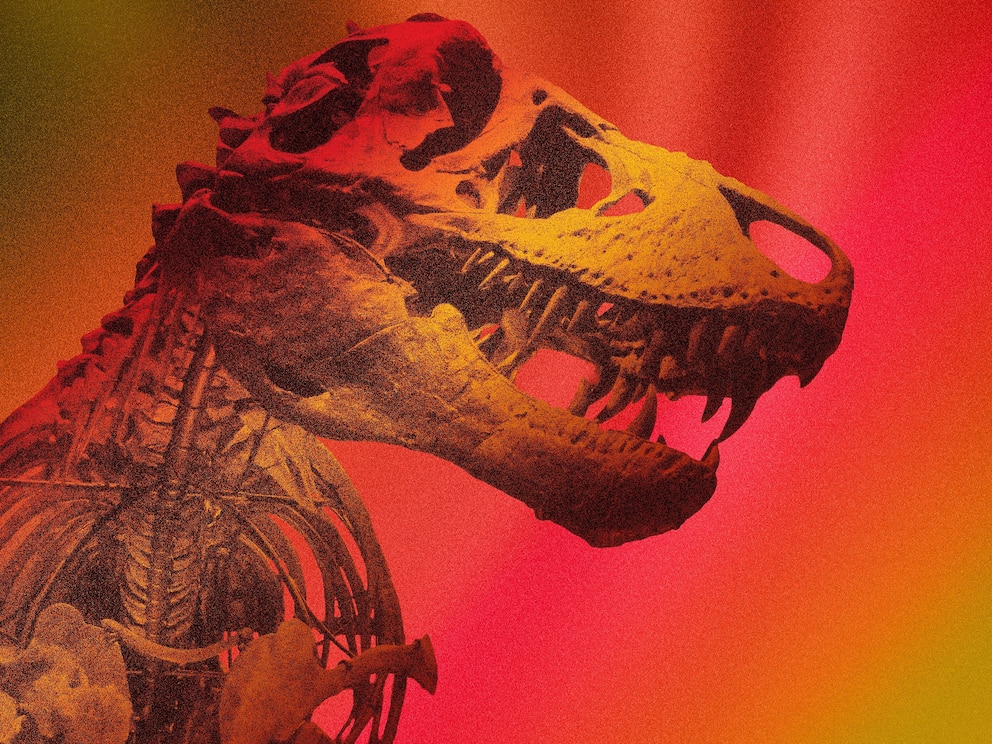
"We're actually able to show that basically all of the North American continent in the Cretaceous would have been potentially suitable habitat for T. rex, and that includes all the way down to modern Central American region and all the way up into the Arctic," said Eagle.
The dinosaur's high body temperature also suggests it needed a lot of food, meaning it was likely an energetic predator or scavenger rather than displaying some of the slower behaviors of reptiles.
"It's very nice to add a little bit of science to a very long story of study into a kind of charismatic species, and hopefully it will engage some young people in science," said Eagle.