Barack, Michelle Obama reflect on new presidential center, greatest White House legacy
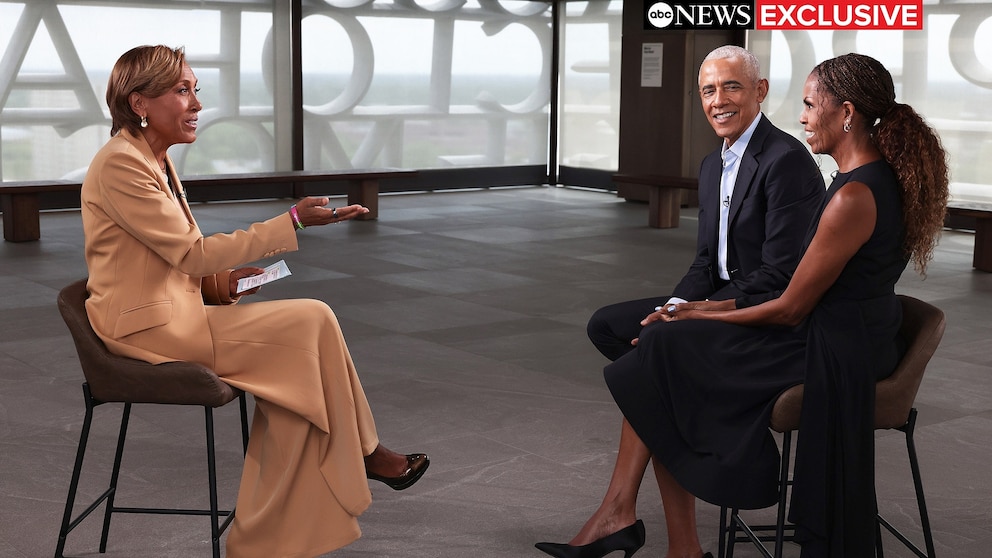
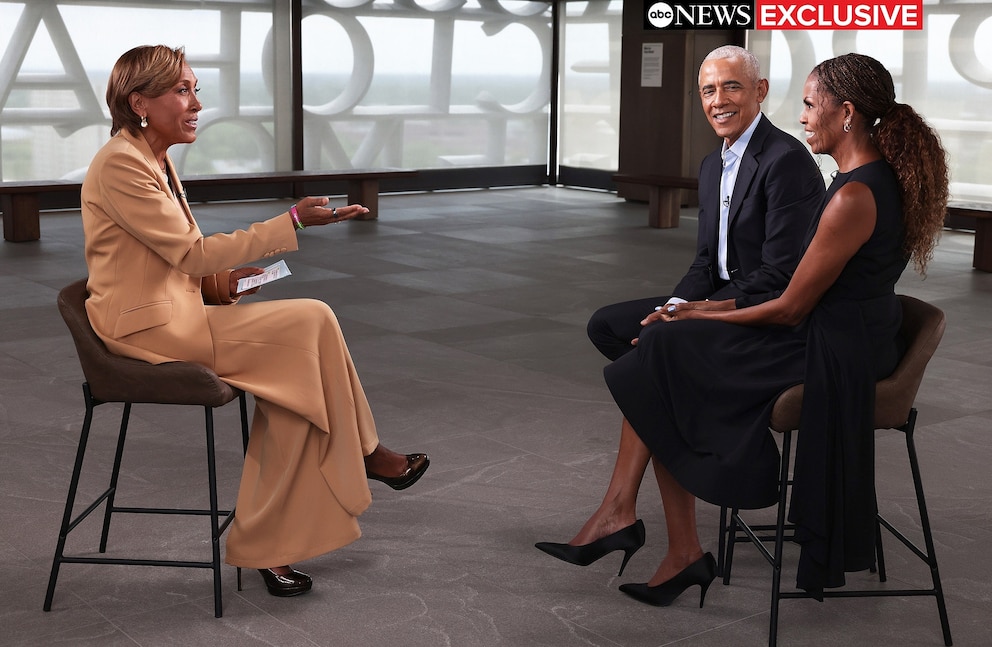
For former President Barack Obama and former first Lady Michelle Obama, the opening of the Obama Presidential Center Friday is the culmination of their shared journey from Chicago's South Side to the White House.
In their first joint interview since leaving office in 2017, the couple tell ABC News that the center is also designed to inspire new generations about what is possible in their democracy.
"I'm not interested in the center and the exhibits being an exercise in nostalgia. I don't want people to just be looking back and say, 'Oh, wow. Hope and change. That was so much fun. And I miss you.' Those are nice sentiments," Barack Obama told "Good Morning America" co-anchor Robin Roberts in the ABC News special "The Obama Legacy: First Joint Interview Post-White House." "What I want people to feel when they come through here is, 'Oh, that was possible, which means I can do that.'"
The center's campus encompasses 19 acres in Chicago's Jackson Park, just steps from the University of Chicago. At a cost of $850 million, it includes 3.7 acres of parkland, offices for the Obama Foundation, an auditorium for public events, public art and athletic facilities, and a new branch of the Chicago Public Library.
In collaboration with the National Archives and Records Administration, the Obama presidential archives are fully digital.
The center's centerpiece is a four-story museum that places the Obama years within a greater context of social change, starting with the Declaration of Independence and spanning the civil rights and labor movements, as well as the grassroots political movement in Chicago that led to Barack Obama's political ascent.
Tune into the ABC News special "The Obama Legacy: First Joint Interview Post-White House," streaming now on Disney+ and Hulu.
The former president said he hopes that, in telling the origin story of his humble beginnings, the museum will inspire young people in knowing that they live in a country where anyone, even those on the farthest margins of society, can play an important role in shaping the future.
"That's what I want people 50 years from now to understand," he said. "That's our best story. That's the thing that we need to not just hang on to, but fight for."
One of the most personal installments in the museum for the former president is a display of letters to the White House from ordinary Americans. He told Roberts he read and responded to 10 letters every night of his presidency.
"I didn't want just fan mail. I wanted letters that reflected what people were saying and how they were feeling," he said.
Reading about people's anxieties about issues like mass shootings in schools or skyrocketing grocery prices was a reminder how his job was "a privilege and responsibility," the former present said, adding, "And you just don't want to let folks down."
Obama on his greatest accomplishment in office, his legacy
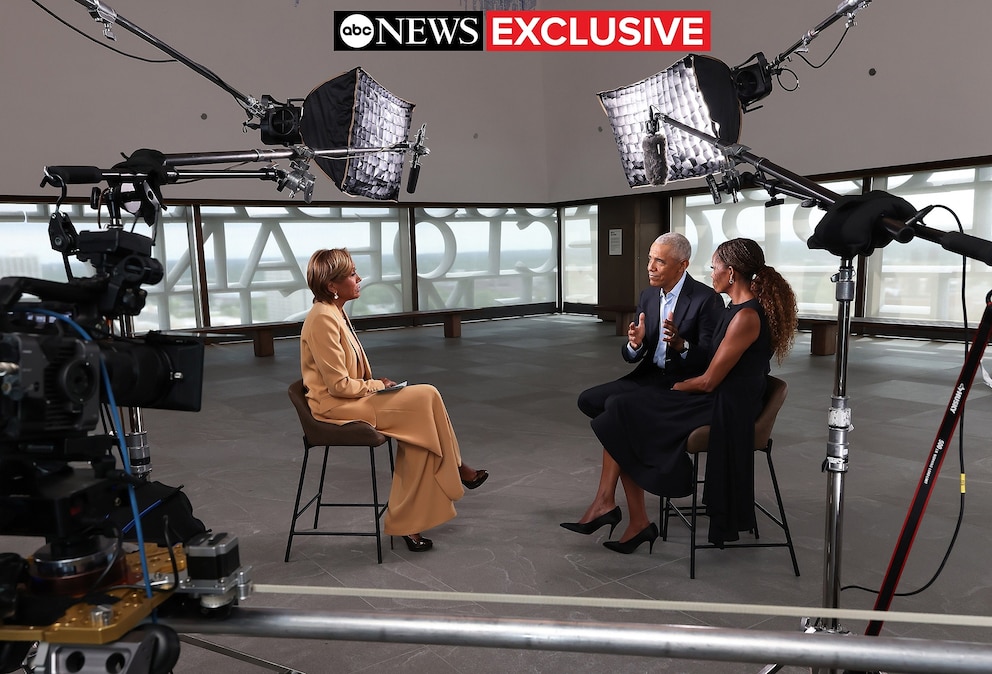
When asked by Roberts what he considers the greatest accomplishment of his two terms in office, Barack Obama cited the passage of the Affordable Care Act in March 2010, which expanded Medicaid, provided greater consumer protections, and lowered health insurance costs, especially for households at or below the federal poverty level.
"For all the resistance from our political opposition, the Affordable Care Act has now helped 50, 60 million people, and continues to help people even though the current Congress has tried to weaken it and taken away some of the subsidies that were really helping a lot of working people," the former president said.
He added that he is especially proud of the tone his administration set, making sure they represented everyone, even those who may express "serious disagreements."
"Ultimately if we get that part of our democracy right, if our politics reflect our better instincts rather than our worst, we can solve a lot of the problems that we confront," Barack Obama said. "And when we don't [get] that right, then I think we get into trouble. And start inflicting damage on, not just on the economy or on certain policy issues, but on what we're passing onto the next generation."
With the Obama Presidential Center, part of the hope, he said, is to "encourage the next generation of leadership."
"People are a little discouraged right now," Barack Obama said, reflecting on his view of the state of the country today. "But, again, I believe that we go through these cycles, and there's going to be a younger generation that pops up and there are going to be leaders who pop up."
The former president said since leaving office, he has largely refrained from inserting himself too much into public policy debates as he sees himself these days as less of a "player" and more of a "coach" for the new generation of leaders.
"You pick and choose your spots. I'm not suggesting I've done it perfectly," he said, going on to cite the example of how George Washington stepped away from politics after his time in office.
"He kind of said, 'All right, I've done my stint. And now I'm going, you know, back home,'" Barack Obama said of the nation's first president. "I think Michelle, you know, very much would prefer a quieter life for us. And on the other hand, there've been some folks who would like to see me out every day, right, banging the drum."
Barack Obama said he believes baby boomers like himself -- he was born in 1961 -- have been, "hanging on in all walks of life and have not made room for young people."
The former president said he would like to see that change.
"Because of the internet, things are splintered. And so it's harder for people to break through the way I was able to break through just with one speech, effectively, at the [2004] Democratic National Convention," he said. "And so given I still have a lot of name ID, part of what I've been trying to do i. ... point out young talent and help lift them up."
During Barack Obama's political ascendancy, the messages of "hope" and "change" were critical to his campaign for his first term. Despite the harsh partisanship of today's political culture, Michelle Obama said she believes those messages are still possible.
"People just have to be fed up enough. They have to want more," she said. "And I think the presidential center hopefully will remind people of just how close we are to moving this country in the direction that we want to move it in."
Michelle Obama said an exhibit in the center that reflects on the Obamas' position as the first Black first family in the history of America reflects that.
"You have one exhibit where people thought that it could never happen, that a Black man, a Black family would never live in the White House. That America would never accept that," she said. "And lo and behold, the whole country, you know, the vast majority of the country believe differently."
Amid the museum's focus on the promise of democracy, Barack Obama said Americans, in times of disagreement, can focus on making their voice heard with their vote.
"The premise of this country is everybody gets a right to say, 'No, I don't agree with that. I challenge that. No, Obama, I think you're making a mistake,' you know?" he said. "And then we have a conversation about it, and then it gets settled in an election. And if enough people decide I didn't know what I was doing, then you move on to the next person."
The Walt Disney Co. is the parent company of ABC News.