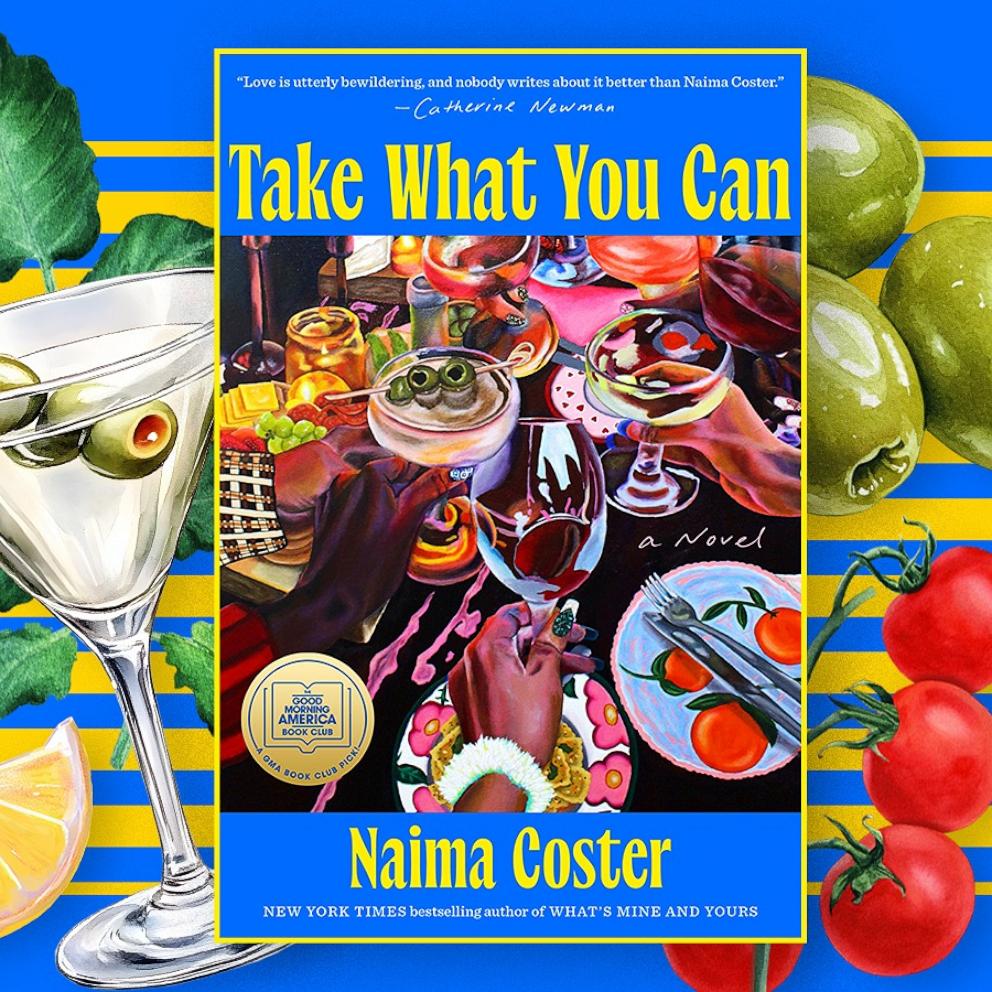
'Take What You Can' by Naima Coster is our 'GMA' Book Club pick for August
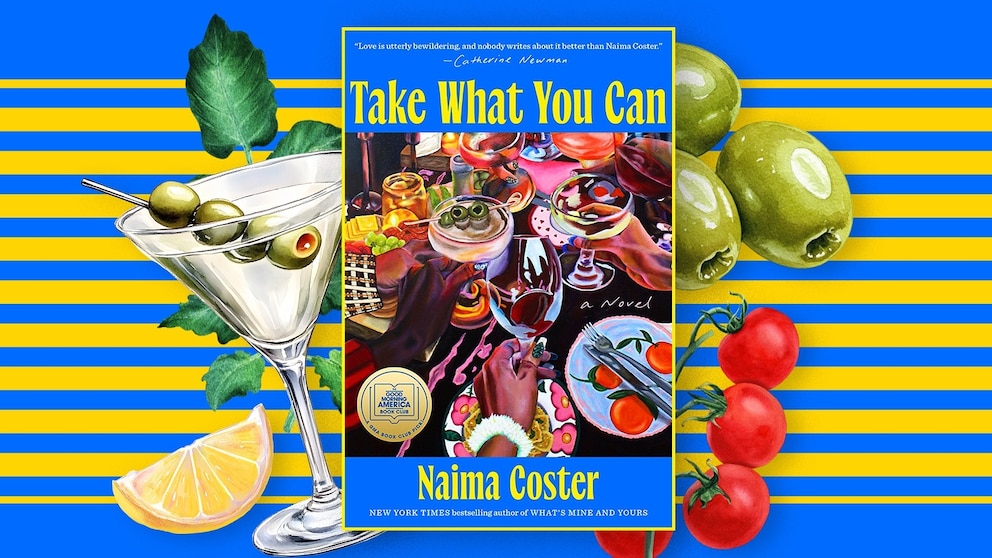
Naima Coster's novel "Take What You Can" is the "Good Morning America" Book Club pick for August.
Coster is a New York Times bestselling author and recipient of the National Book Foundation's 5 Under 35 honor. Her previous novel, "What's Mine and Yours," was a Read with Jenna selection and was named one of the year's best books by Kirkus Reviews, Esquire, Marie Claire and others.
"Take What You Can" follows best friends Val and Milly, who first met as the only Black students on a study-abroad trip to France and quickly formed an unbreakable bond. Now in their 30s, both are married and expecting daughters. When Milly invites Val to move to New York so they can raise their children together after years apart, the answer is an enthusiastic yes.
"Despite their excitement, the pair secretly wonders if their friendship has always worked best as a trio," a synopsis reads. "On that first trip to France, these two motherless daughters were taken under the wing of an older woman named Helene. She showered them with money, love, and attention and showed them the possibilities of an independent and abundant future. But now, without Helene and her guidance, who are Milly and Val?"
The synopsis continues, "Milly, a successful influencer married to restaurant royalty, is occupied with her desire for freedom. Val, a brilliant journalist, is unsure whether she fits into Milly's new world. The realities of class and social capital, of strained marriages and the demands of motherhood, serve as constant reminders of how far apart they've grown. And no matter how much they try to avoid it, everything comes back to the rift that began all those years ago in France. What they've long tried to bury may finally destroy their sisterhood."


Set between Brooklyn and the beaches of southern France, "Take What You Can" is a novel about friendship, family, motherhood, and identity, exploring what it means to build a life and hold on to the people who know you best.
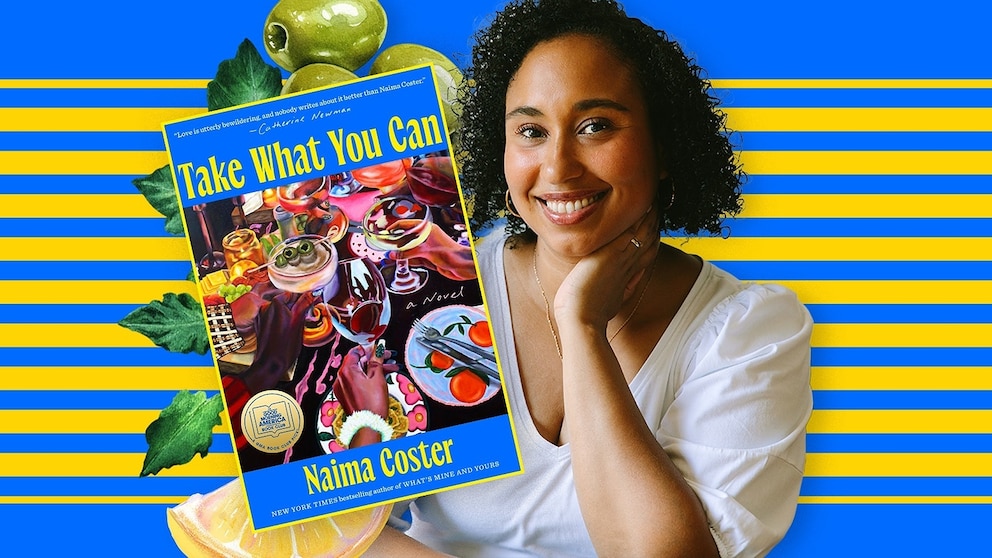
Read an excerpt below and buy a copy of the book here.
By clicking on these shopping links, visitors will leave ABCNews.com and Goodmorningamerica.com, and these e-commerce sites are operated under different terms and privacy policies. ABC will receive a commission for purchases made through these links. SOME PRICES ARE DYNAMIC AND MAY CHANGE FROM THE DATE OF PUBLICATION. Have questions about ordering or a purchase? Click here.

This month, we are also teaming up with Little Free Library to give out free copies in Times Square and at 150 locations across the U.S. and Canada. Since 2009, more than 300 million books have been shared in Little Free Libraries across the world. Click here to find a copy of "Take What You Can" at a Little Free Library location near you.
Read along with us and join the conversation all month on our Instagram account, @GMABookClub, and with #GMABookClub.
***
Excerpt from "Take What You Can" by Naima Coster
FRANCE
August 2004
On one of their last nights in Paris, all the beginners' French students piled onto a boat that would sail them back and forth across the Seine.
It was twilight, and the Americans were already drunk.
They kept buying wine in little cups from the kiosks, shouting over the guide who stood at the bow, taking pictures with disposable flash cameras as they leaned against the railing.
Milly had avoided her cohort in the study abroad program for exactly these rea-sons. After seven weeks, they were still rowdy and conspicuous, uninterested in learning any French.
They had chosen Paris because, as a boy from Westchester had told her, Why not? and a girl from Vermont, The cheese! It went unsaid they were all there because they could drink.
They had no clue what it had cost Milly to be here, what it had cost her mother.
She was there to learn the language, to see as much as she could, to savor it all.
She had traversed as much of the city as she could alone, whereas the other students never ventured out without each other.
They got high or drunk in the Tuileries or Jardin du Luxembourg, went out for over-priced tourist-trap dinners where they could grow red-faced and shout at each other, Snails! She had joined them on their last outing for one reason.
She wanted to talk to Val.
She had seen Val at their daily French tutorial, but they hadn't spent much time together.
Val had chosen a literature elective and a class on resistance movements; Milly had chosen cinema and art history.
They were the only two Black girls, but Val stuck to the group, so Milly saw her only in class or in the hallway at the dorm.
Milly knew the other students considered her unapproachable, even for a New Yorker.
They had made passing comments about her multicolored flash cards, her workbook teeming with sticky notes. But Val always smiled at her and said hey.
She packed her lunches, the same sandwich every day: ham, cheese, and butter on a baguette.
Milly liked the careful way Val took notes and photographs on their field trips. She seemed to grasp how momentous it was to be here.
She had been hooking up with Archer, a white boy who alternately ignored her or slouched around with his arm flung over her shoulders.
It bothered Milly, but Val seemed unflustered, which meant she wasn't quite as fragile as the other kids here.
Their classmates had spent weeks gossiping and crying over who was hanging out with who, who might keep seeing each other once the term was over. Milly needed someone sturdy.
Her mother had died in March. Milly knew as soon as she arrived at the hospital and found the door to Gladys's room was locked.
A woman behind a desk told her she couldn't go in; she had to wait for the doctor. Milly tried to rationalize away the truth. Maybe her mother was resting.
Maybe they had wheeled her away for a scan.
Milly cycled through the possibilities, her heart warning her that soon she would know something she could never unknow.
At school, she told only her dean. No one else knew her mother had been sick.
She took off two extra weeks around spring break, turned in all her midterms from the studio in Queens that her great-aunts helped her empty.
They paid for everything, so they made the decisions -- where Gladys would be buried, what to put into storage, what to throw away.
They told Milly she could stay on their couches when the dorms were closed. France was in a few months.
Milly had made it to the summer somehow. She had made it to Europe, just as her mother had wanted.
On the boat, Val sat alone, clutching a cup of wine. She was watching Archer pose for a picture with his buddies, the Palais de Tokyo looming behind them.
Milly sat beside Val, and Val smiled at her and said, "I like your sunglasses."
It was the last sign Milly needed. The sunglasses were her mother's. "Have you had a nice term?" she asked.
"Oh yeah, I never want to go back home."
Milly said, "I am thinking of staying an extra few weeks." Then she told Val her plan.
She would take a train to Marseille, spend a few days near there, then travel down the coast to a town where she'd found a cheap hostel.
From there, she would make day trips to all those extravagant Riviera towns she'd read about -- Nice, Monaco, Cannes.
"I could use someone who knows how to drive. Can you drive a stick?"
"Yes," Val said, "but I don't think I can afford it."
Milly explained she'd cover the hostels and car rental, and they could make the rest cheap.
"We'll make sandwiches. Eat pastries in the morning. Wine for dinner."
Val laughed. "All I'd have to do is move my flight?" "We'd be back in time for the first day of class." "And you want me to go with you? So I can drive?"
"I am a New Yorker," Milly said, because it would have been strange to say I feel like I can trust you and I don't want to go alone.
"All right," Val said, and Milly shook her hand, as if they'd closed a deal. She stayed beside her until the boat returned to the quay.
At the end of the week, they packed their bags and took the train south together.
They started in Cassis, where they spent three days swimming and kayaking and drinking cheap bottles of rosé.
Val was astonished by Milly, how beautiful she looked in her sun hat and yellow bikini, how courageously she commanded them through the Calanques, paddling the channels among the rocks, as if she had been there before.
She had a nerve that Val admired, whether they were out on the water or setting up a picnic on the sand.
She was a quick learner and knew the names of the cheeses they were eating, what kind of milk had been used to make each.
She bought little treats, pots of chocolate mousse or pieces of nougat, that made their fifteen-euro grocery-store dinners feel extravagant.
She marched around the village asking for directions, never tripping over her words. She did not seem like a college sophomore. Val was awestruck that Milly had chosen her.
On the last morning before they were set to travel east to Antibes, they visited a market where Milly wanted to buy fruit.
Milly spoke to the farmer who had brought the citrus fruits from his orchard, and he told Milly there was a seaside town they had to visit before they left.
It was seventy kilometers west, in the opposite direction of where they were headed next.
It was where aristocrats and royals spent their winters, English poets and American novelists their summers.
It was likely too expensive for them to stay within the city walls, but they should go and see, he said.
Back at the hostel, Milly looked up the town on the computer in the internet café and told Val all they could do.
They could swim in the blue water, eat soupe de poisson, visit an old fort.
It sounded no different to Val than what they would be doing in Antibes and all along the coast, but Milly was abuzz, and Val didn't want to tell her no.
Already, Val knew that she liked to watch Milly get what she wanted. In Paris, Milly had been aloof, inscrutable.
She didn't seem to enjoy anything.
But here, Val could see the pleasure on her face when they rowed into the shadow of a tremendous rock or hiked down through brambles and reached a desolate, rocky beach with glinting blue water.
It made Val feel special to be a witness to Milly's private wonder.
***
From "TAKE WHAT YOU CAN" published by arrangement with Pamela Dorman Books, an imprint of Penguin Random House LLC. Copyright © 2026 by Naima Coster.